
Believability is always a tricky thing in cult movies. From the outside, cults rarely seem like a great idea and the one in Martha Marcy May Marlene (2011), a naturalistic thriller starring Elizabeth Olsen as a woman who is indoctrinated into and then escapes from a cult, has some especially glaring drawbacks. Ritualized rape. Burglary. Cat murder. Person murder. How likely is it that Olsen’s Martha (rechristened Marcy May by the cult) would go along with all of this, especially since in the earliest pre-cult scenes she seems to be relatively well-adjusted and emotionally stable?
The leader of the cult, Patrick (played by John Hawkes), is the nominal draw. But while Hawkes is charismatic and compelling as he usually is, his dialogue as Patrick ranges from hokey cult-speak (“Death is beautiful because everyone fears death”) to pretty rote pop psychology (“I know people have abandoned you your whole life. Your father.”) Even though the movie does a good job establishing pre-cult Martha as someone without a strong support system, Patrick still doesn’t seem like a persuasive enough figure to draw her into all the cult-y hijinks.
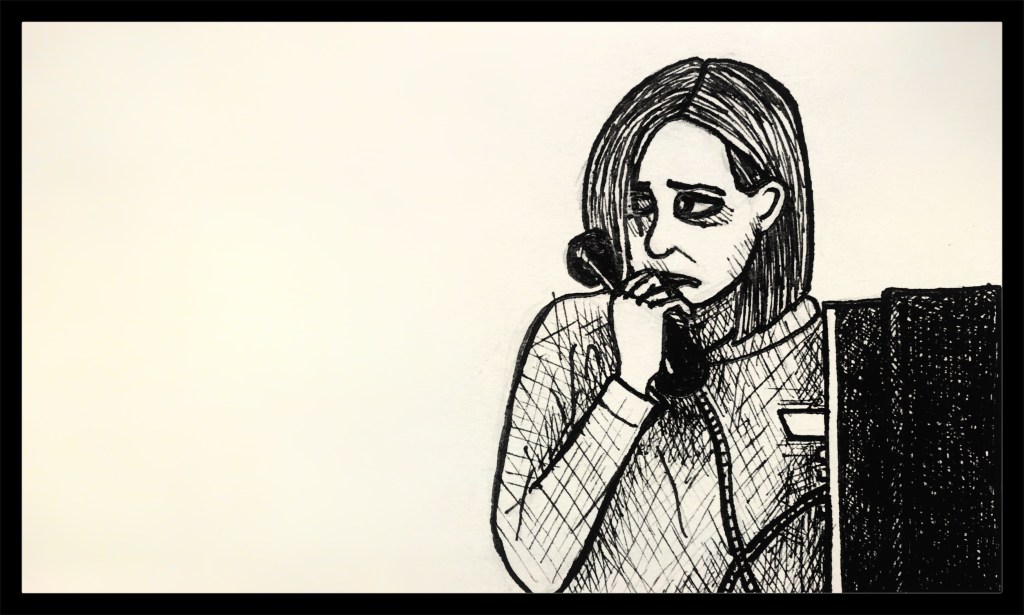
But the movie does something very smart, very persuasive, and, to me, deeply upsetting: it focuses on the women in the cult. There’s Zoe, Martha’s young, bubbly handler, and Katie, a warm, maternal figure who assures Martha early on that “it takes time for people to find their role in a new family.” They are the ones who initially provide Martha with the connections she longs for, and they are the ones who, at first gently and later more harshly, enforce the norms of the cult. Every time Martha watches one of Patrick’s creepy interactions with a member of his harem, Zoe or Katie chides her not to stare: Patrick’s relationships with the other women are none of her business. When Martha samples a bite of dinner as she cooks, Katie slaps her: The women don’t eat until the men finish.
And most disturbingly of all, Zoe and Katie normalize Martha’s rape. It’s an initiation ritual: Martha is drugged, clothed in white, and brought to a darkened room where Patrick is waiting. Afterwards, Martha and Zoe lay in bed together, and Zoe tells her “I’d give anything to have my first time again” with the enthusiasm of high schooler describing a first kiss with her crush. Katie’s response is even more insidious. She comes to Martha outside the room where it happened, where Martha is disoriented, still drugged, not fully understanding what has happened. Katie sits next to her and says, her voice full of kindness and understanding:
I know you feel like something bad just happened, Marcy May. But you have to trust me, that wasn’t bad. That was truly good. We’ve all been in this situation. We wouldn’t all still be here if what happened in that room was bad.
In oppressive patriarchal societies, women don’t make the rules. They don’t commit the atrocities. They are the custodians of the domestic sphere, the arbiters of the day to day, and so, their power is the power to weave the atrocities into the fabric of daily life – and to curb the behavior of anyone who would pick at the threads. Think the Aunts in The Handmaid’s Tale. Think Betty Francis (née Draper). This power, and the way it entices women into perpetuating their own subjugation, is something Martha Marcy May Marlene understands and portrays very effectively. Once Martha accepts the reality of the cult, she is assigned to be the handler for a new, painfully young recruit. Martha gets to act as the enlightened, authoritative guide: she explains where the cult members sleep, when they eat, how they contribute. She echoes Katie’s earlier encouragement: “It takes time to find your role in a new family, huh?”
We understand why Martha is doing this: indoctrinating the girl into the cult cements Martha’s own sense of belonging. And more than that: it allows her, for a time, to understand her trauma as something else. Not as something done specifically to her, but as a ritual, to be repeated. And so it is terrifying but understandable that, when the time comes, Martha commits an act she will later remember with horror. She feeds the girl a drugged smoothie, assures her there is nothing to worry about, and then leads her to the room Martha herself had entered months before: the room where nothing bad happens.
 Kat's Features